
What happens after we throw away our trash or flush the toilet? The waste we generate doesn’t disappear — it must be collected, treated, and safely returned to the environment. In the United States, strong infrastructure ensures clean water and sanitation. But in many developing regions, including the African islands of Seychelles, waste management remains a major challenge. Inadequate systems have led to marine pollution and limited access to safe drinking water — problems that threaten both human health and ocean ecosystems.
A Paradise Under Pressure
Seychelles, an archipelago of 115 islands in the Indian Ocean, is famous for its white-sand beaches, coral reefs, and lush forests. Tourism drives much of the local economy, but rapid population growth and expanding visitor numbers are straining the country’s limited infrastructure.
Despite its natural beauty, Seychelles faces urgent challenges in managing waste and wastewater. The lack of adequate facilities, financial resources, and technical expertise makes it difficult to provide clean water and effective sanitation for all. The result: mounting waste, declining water quality, and growing pressure on fragile marine ecosystems.
Water: A Human Right and a Shared Responsibility
In 2010, the United Nations General Assembly declared access to clean drinking water a basic human right. Chemists Without Borders (CWB), a nonprofit organization dedicated to using science for humanitarian good, is working to make that right a reality.
CWB’s mission is to integrate education, service, and innovation to create lasting, science-based solutions that improve lives and protect the planet. Through partnerships around the world, the organization mobilizes the global chemistry community to strengthen water quality, enhance climate resilience, and build sustainable communities.
A Fulbright Mission to Inspire Change
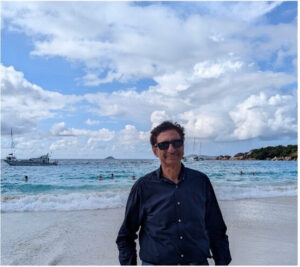
Recently, Dr. Achal Garg (above), environmental scientist, Fulbright Scholar, and Chairman of Chemists Without Borders, traveled to Seychelles as part of the Mandela Washington Exchange Program. During his visit, he delivered lectures and workshops on water pollution, wastewater treatment, and pollution prevention — emphasizing how protecting marine resources is essential to sustaining Seychelles’ blue economy.
By sharing knowledge about the causes and effects of pollution, Dr. Garg empowered students, professionals, and community members to take responsible action. His work underscored a simple but powerful truth: progress begins with education and awareness.
The Challenge Beneath the Surface
One of the main challenges Seychelles faces is its reliance on landfills. Space is quickly running out, and untreated leachate — the toxic liquid produced when rainwater filters through waste — threatens to contaminate groundwater and coastal waters.
Leachate carries a mixture of heavy metals, hazardous chemicals, and organic pollutants. Without proper collection and treatment, it seeps into soil, harming marine life, damaging coral reefs, and reducing agricultural productivity.
The Seychelles Solid Waste Management Plan 2020–2035 calls for more efficient collection, recycling, and reduced landfill dependence. However, implementing these strategies requires both investment and technical innovation.
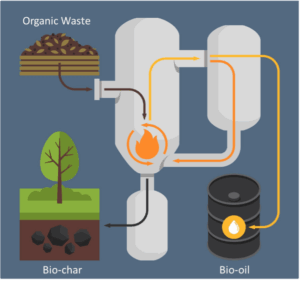
Turning Waste Into Opportunity: Pyrolysis
Dr. Garg points to one promising approach: pyrolysis (above diagram), a thermal decomposition process that can transform solid waste into useful products.
“Another sustainable solution to help reduce landfill dependence relies on directly treating the solid waste using a thermal decomposition process called pyrolysis,” he explains.
During pyrolysis, organic waste is heated at very high temperatures in the absence of oxygen, breaking it down into gases, liquid bio-oil, and solid bio-char. The gases can be used as biofuels, while the bio-char can be applied to improve soil fertility, absorb pollutants, and trap carbon — helping to mitigate climate change.
By investing in such technologies, Seychelles could dramatically reduce landfill use, generate renewable energy, and create local revenue streams from waste materials.
Pollution Beyond the Land
“Protecting water in Seychelles starts at home,” says Dr. Garg. “Trash that never reaches a landfill is often discarded directly into the ocean — especially plastics such as bags, wraps, straws, and fishing gear.”
When exposed to sunlight and ocean waves, these plastics break down into micro- and nanoplastics that can harm marine life. Small organisms such as zooplankton and fish ingest these particles, leading to digestive and reproductive problems, and often death. The ripple effect extends up the food chain, impacting fisheries, tourism, and local livelihoods.
Tourism adds another layer of complexity. Sunscreen washed off in the ocean can bleach corals and disrupt marine ecosystems. Dr. Garg recommends stronger regulations and education campaigns to promote reef-safe sunscreens and environmentally responsible tourism practices.
Wastewater: The Hidden Threat
The hospitality sector, including hotels and resorts, generates large volumes of wastewater containing detergents, oils, and nutrients that can harm aquatic life. While Seychelles currently operates wastewater treatment plants, the growing demand calls for more efficient and energy-saving technologies.
Dr. Garg advocates for the installation of electrochemical water treatment systems at resorts and other facilities.
Electrochemical treatment uses electricity to drive chemical reactions that break down pollutants. Through a process called electrochemical oxidation, contaminants are degraded into harmless compounds, while producing hydrogen and oxygen gases that can be reused as fuel.
“The process is effective against almost every chemical and biological pollutant, low cost, and low maintenance,” Dr. Garg notes.
A Shared Future
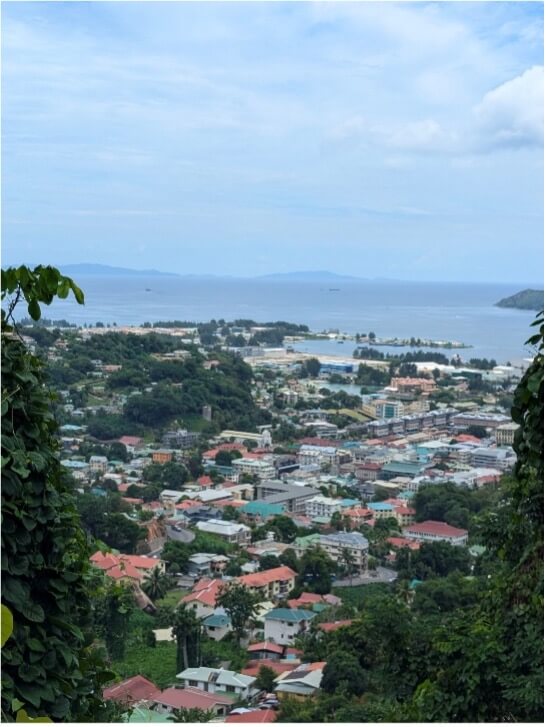
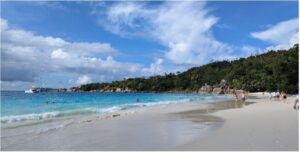
The challenges facing Seychelles (above) are complex, but solutions are within reach when science, education, and community come together.
Dr. Garg’s work illustrates how a single initiative can inspire lasting change — from advancing clean water access to protecting fragile marine ecosystems. Through projects like these, Chemists Without Borders is building connections across continents and transforming chemistry into a force for global good.
“Every community deserves clean water,” says Dr. Garg. “When we share knowledge and act together, we not only protect the planet — we protect our shared future.”
Jessica Coleman – October 15, 2025