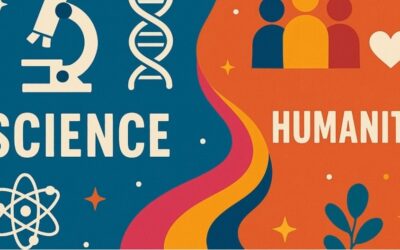
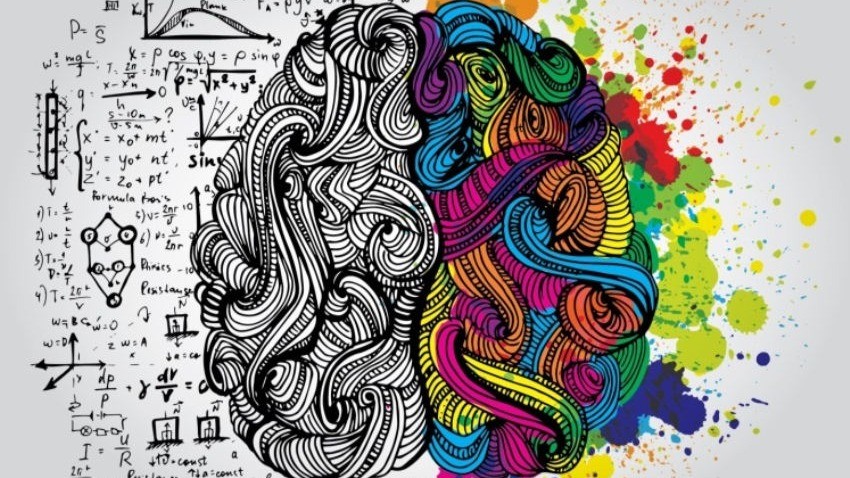

Science has always been humanity’s boldest act of hope — our way of saying that through understanding, we might also bring healing. It represents our desire not only to comprehend life, but to honor it.
We live in an age of extraordinary knowledge. Science has mapped the human genome, expanded life expectancy, illuminated distant galaxies, and connected billions of people across continents. It has cured diseases once thought incurable and built technologies that have reshaped how we live, work, and dream.
Yet for billions of people, that promise remains painfully out of reach. Across much of Africa, South Asia, Latin America, and even in the forgotten corners of wealthier nations, science is a light seen from far away, never quite reaching their homes. For many, clean water, safe medicine, and reliable energy remain as elusive as ever.
Science has never been more powerful — or more misunderstood. As it deepens its specialization, its language grows narrower, more technical, and more exclusive. To the ordinary citizen, it often feels distant — a conversation happening somewhere else, focused on problems that rarely reflect their local realities.
When people feel excluded, fear and falsehood rush in to fill the silence. Science must rediscover its human voice and speak to the hopes and struggles of ordinary people, not at them. It must approach communities not as subjects, but as partners, not as recipients of expertise, but as co-creators of solutions.
The question is not whether science can help humanity — it can, and it has. The question is whether we will allow it to serve its deepest purpose: not only to expand what we know, but to strengthen who we are — to listen, to heal, to belong – to stand beside, not above.
Perhaps the truest measure of science is not what it discovers, but how it helps us live with greater dignity, compassion, and understanding.
Science has always existed in tension between promise and peril. The same chemistry that cleans our water can pollute our rivers. The same nuclear reactions that power cities can destroy them. The same algorithms that connect us across oceans can divide us within our own minds. These contradictions do not make science the enemy; they remind us that knowledge itself is neutral. It is our intention — our sense of duty and responsibility — that gives it direction.
Science is not failing us; we are failing to align it with compassion, humility, and justice.
The greatest humanitarian challenges of our time — climate change, poverty, displacement, inequality — are not simply technical puzzles to be solved. They are deeply human questions about how we live together on a fragile planet—a moral crisis with no easy answers.
Science cannot solve them alone, nor should it try. Its role is not to replace ethics, culture, or compassion, but to stand beside them. It can offer tools, insights, and frameworks—but it must never mistake them for the fullness of human experience.
To act with humility is not to act timidly; it is to act with awareness of what is sacred — life itself, in all its complexity. It is the recognition that knowledge, no matter how vast, will always be incomplete, and that discovery, however powerful, must be rooted in trust to bear fruit. No formula can measure the fear of a mother who cannot feed her child. No dataset can capture the sorrow of a farmer watching his crops wither in the sun. And no algorithm can quantify the quiet joy of a child whose curiosity outshines his circumstance.
Humility reminds us that science, no matter how advanced, is still part of something larger: the shared effort to make life more livable, meaningful, and just. Science is most alive when it serves human dignity, and that knowledge is most powerful when it connects rather than divides.
To serve humanity, science must begin with listening. Communities know their own needs and
hold deep wisdom. In the hands of farmers who read the sky, in the wisdom of elders who know which plants heal, and in teachers who nurture curiosity without laboratories or textbooks, there is knowledge that deserves not to be overwritten, but honored. When scientists and communities listen to one another, discovery becomes an active dialogue, and knowledge becomes shared.
Humanitarian science must therefore be a shared journey — humble, respectful, and open to learning from those it seeks to serve. In that exchange, knowledge becomes wisdom, strong enough to cross the inner boundaries of disciplines and the outer borders of wealth, language, and geography. When grounded in integrity and humility, science becomes less about mastery and more about meaning; less about invention and more about inclusion; less about solutions and more about enduring relationships.
To reclaim science for humanity is to remember that knowledge is not an end in itself, but a responsibility. It is to ensure that every breakthrough, every experiment, and every intervention is rooted in compassion and guided by conscience. It is to recognize that the goal is not to change the world from above, but to walk beside it — to use knowledge as a means of connection, healing, and hope.
At Chemists Without Borders, we stand in that space — where science meets humanity, where knowledge meets compassion, and where progress begins not with invention, but with listening. We are scientists, educators, students, and professionals working hand in hand to turn compassion into capability, collaboration into capacity, and help communities in need to become communities empowered.
Science may never fix every problem. But it can help us face them — more wisely, more humbly, and more together. It can remind us that even in the complexity of our shared challenges, there is always room for connection, for empathy, and for light.
When science listens, it learns. When it learns, it connects. And when it connects, it becomes what it was always meant to be: a light that does not blind with brilliance, but one that gently illuminates every heart and every mind.