Sanitation

Sanitation and hygiene are critical to prevent premature deaths in children and the development of a healthy society. An estimated 1.7 billion people, or about 22% of the world’s population, lack basic sanitation facilities such as access to toilets. Around 2.3 billion people (about 29%) lack access to basic hygienic conditions, such as access to a handwashing station with soap and water at home, school, or work, and disposal of wastewater and garbage. Chemists Without Borders works with the communities to help them improve their sanitation and hygienic conditions.

Wastewater treatment system in Bangladesh

Chemists Without Borders has been working with the Terial School administration to develop a total sanitation system. This includes construction of 36 toilets (20 for girls and 16 for boys), 16 hand washing stations, and a wastewater treatment system with a sand filter to remove all contaminants before the effluent is released to the local stream.
More Projects

Safe Water and Sanitation in Bangladesh

Safe Water and Sanitation in Bangladesh

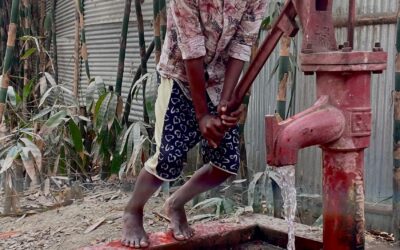
The Challenge: A National Crisis Bangladesh faces one of the world's most severe public health crises due to naturally high arsenic levels in groundwater. This widespread contamination leads to fatal illnesses, tragically causing an estimated 40,000 Bangladeshi deaths...

read more
Clean Water Initiatives

Clean Water Initiatives

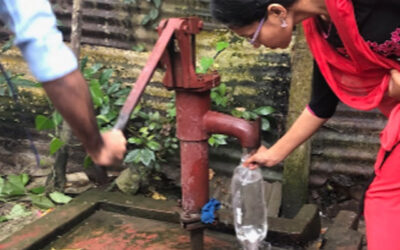
The aim of the clean water initiative is to make clean and safe drinking water and sanitation facilities available to everyone. About 30% of the world’s population has no access to safe drinking water. An estimated 700 children under the age of five die every day from...

read more
Climate Initiatives

Climate Initiatives

Climate change is not a problem of the future. It is happening today. Climate change is referred to as the long-term shifts in temperatures and weather patterns. Some climate variations are a natural part of the Earth’s evolution and solar cycle. However, human...

read more