The Challenge: A National Crisis
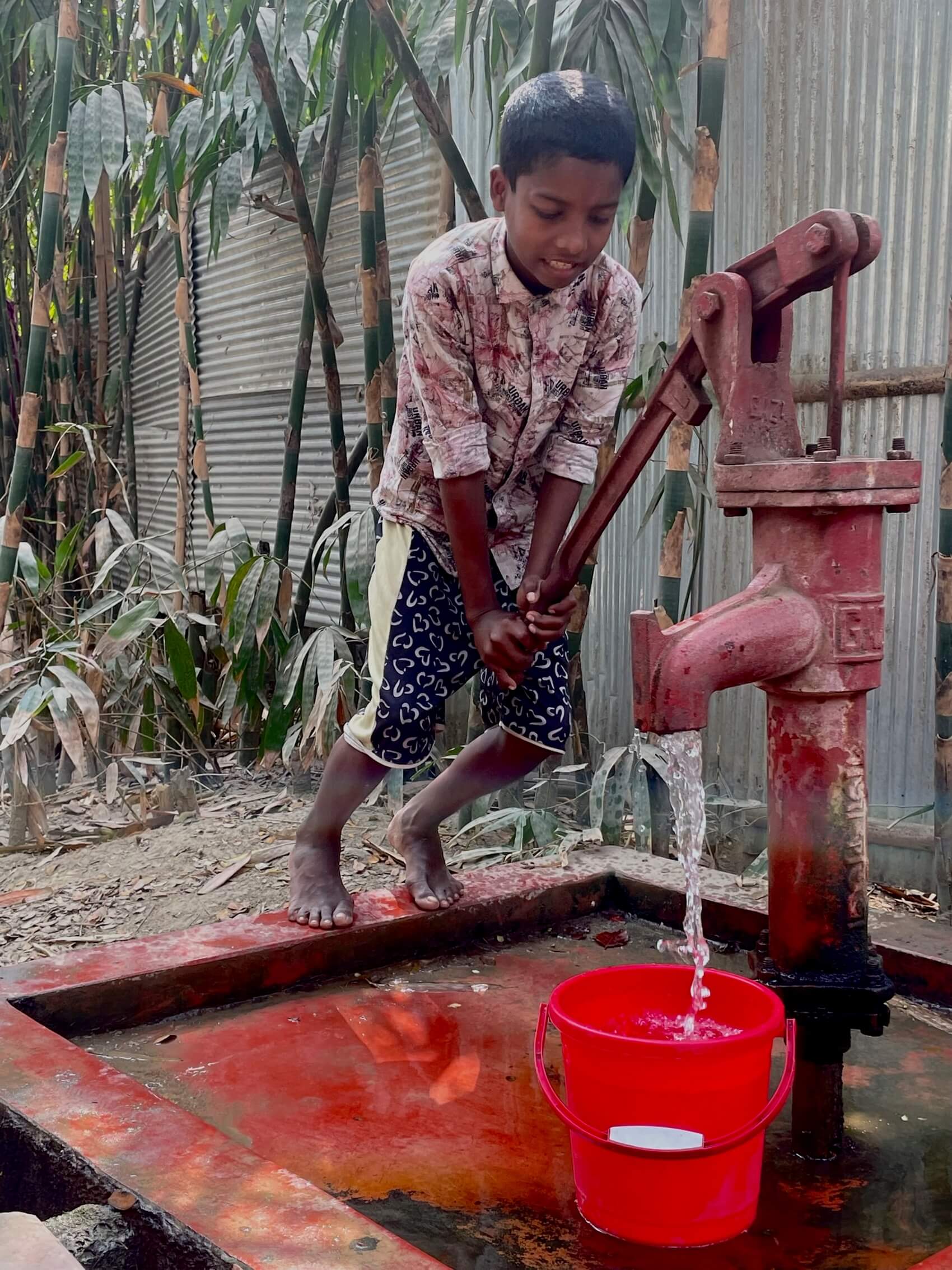
Bangladesh faces one of the world’s most severe public health crises due to naturally high arsenic levels in groundwater. This widespread contamination leads to fatal illnesses, tragically causing an estimated 40,000 Bangladeshi deaths each year. Many schools rely on heavily contaminated wells, putting students at immediate risk.
Phase 1: Education and Awareness (2024)
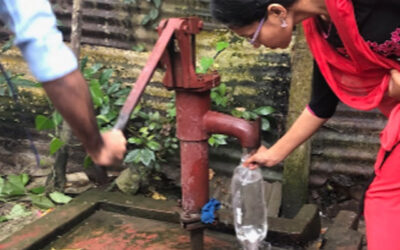
Our project began with a critical focus on awareness. We hired five local interns to launch an extensive education campaign in high schools, delivering presentations that explained the severe hazards of arsenic in drinking water. Simultaneously, Chemists Without Borders recruited university and local high school students to conduct community well-water testing. This effort helped residents identify contaminated wells and educated them on the immediate life-saving practice of sharing water from nearby safe sources.
Phase 2: Building Sustainable Infrastructure
Thanks to successful fundraising, we advanced to developing and implementing a permanent solution. We focused on high schools with the most contaminated water sources:
Terial High School Water & Sanitation System
At Terial High School in the Chittagong District, we constructed a new, comprehensive drinking water and sanitation system. Key components of this infrastructure include:
- A new ground well that draws water for the system.
- An advanced arsenic removal system to purify the raw water.
- A UV disinfection system to sanitize the treated water, ensuring it is safe from biological contaminants.
- Installation of twenty new drinking water and hand-washing stations, providing students with easy access to safe, clean water.
Impact and The Future
The new system at Terial High School does more than just protect students—it serves as a blueprint for solving the arsenic problem in schools nationwide. This innovative, replicable arsenic remediation design can be scaled across Bangladesh, ultimately offering safe drinking water to millions of students. Our efforts are focused not just on aid, but on providing proven, sustainable solutions that pave the way for a healthier future.