
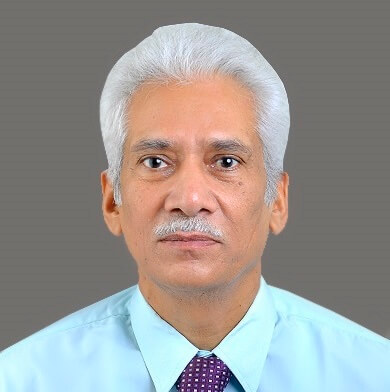
Rishi B Sharma
Volunteer

Dr. Rishi B Sharma obtained a Ph.D. in Physics from the University of Pune after an M.Phil. (Physics) from Rajasthan University and M.Sc. (Physics) from Agra University. Throughout his academic and research career spanning over three decades, he has been a passionate teacher and dedicated scientist. He has taught Physics courses at the graduate (B.Sc./ B.Tech.) and postgraduate (M.S./ Ph.D.) levels. At the Naval College of Engineering, INS Shivaji, Lonavla, he modernized the Physics laboratory by introducing carefully designed experiments to better understand physical concepts. About 2,000 technical cadets/engineers of the Indian Navy were trained in the lab. He initiated a collaborative M. Tech. program between INS Shivaji and IIT Bombay, Mumbai, which was successfully running from 2004. Subsequently, at the Defense Institute of Advanced Technology (DIAT), Pune – a premier training institute under Defense Research & Development Organization, Dr Sharma initiated research in the identified areas of ‘Nanotechnology’ and ‘Photonics’ and modernized the lab facilities. He directed research on the synthesis and property characterization of metallic nanoparticles/ structures. Nanoscale coatings of gold nanoparticles of different shapes and sizes showed ultra-hydrophilic and antifogging properties. The PVP-functionalized gold nanoparticles were found to be excellent sensors for detecting toxic Cd ions at the ppb level in drinking water.

Dr Sharma has extensive experience in collaborating with other researchers at the national and international levels. He collaborated with the Jawaharlal Nehru Center for Advanced Scientific Research (JNCASR), Bangalore, the University of Oxford, UK, and other research laboratories. He initiated the memorandum of understanding (MOU) between CeNSE, IISc, and DRDO for the usage of advanced research facilities for the fabrication and characterization of nanoscale devices.

He mentored a number of students for their Doctoral, master’s, and bachelor’s degrees. He published his research work in international journals. He has received numerous awards and honors for his significant academic and research contributions.

Following Albert Einstein’s quote, “Keep good comradeship and work with love and without preconceived ideas, and you will be happy and successful in your work,” Dr. Sharma is open to exploring various possibilities for bridging the gap between science and humanity.
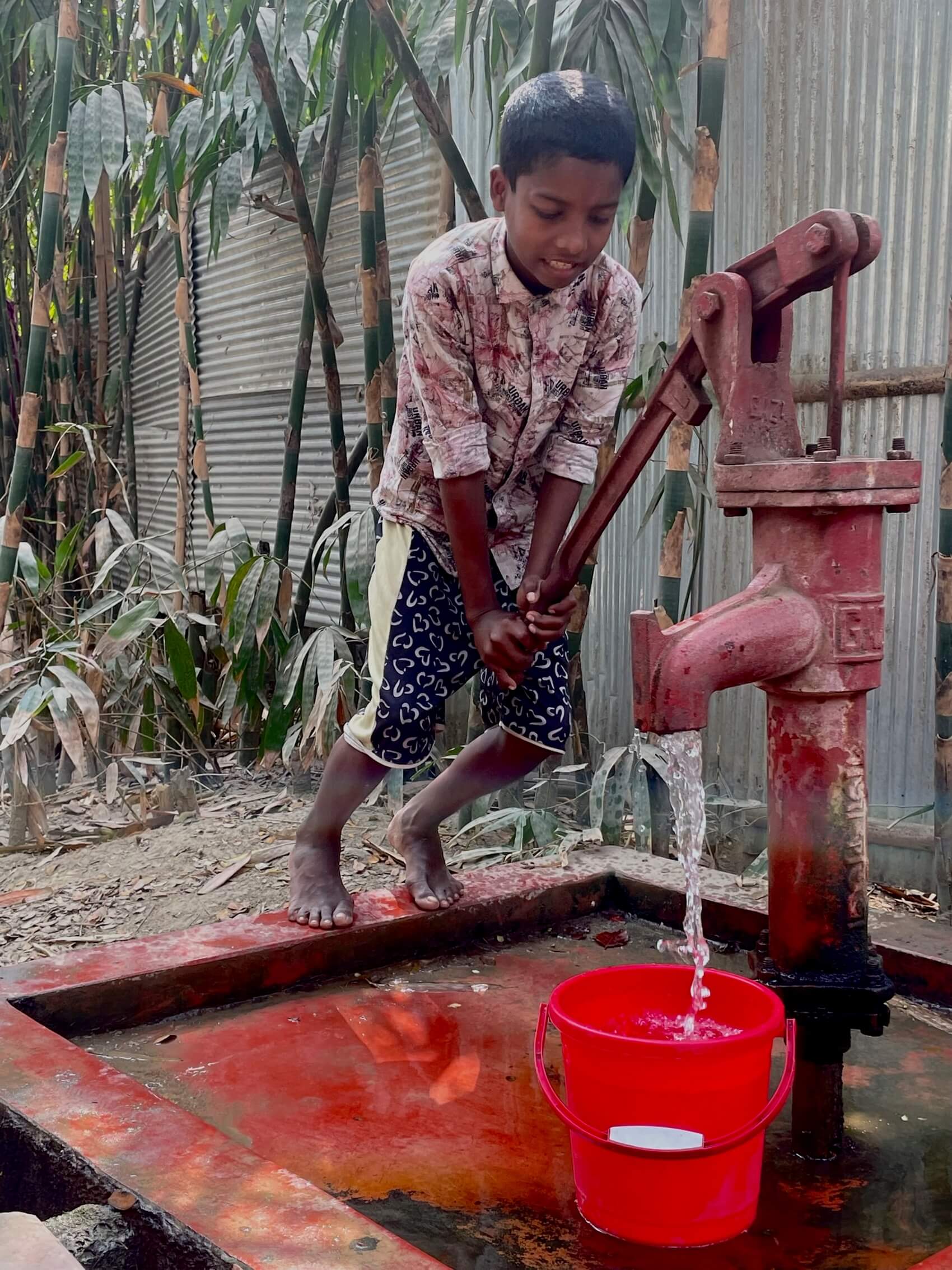
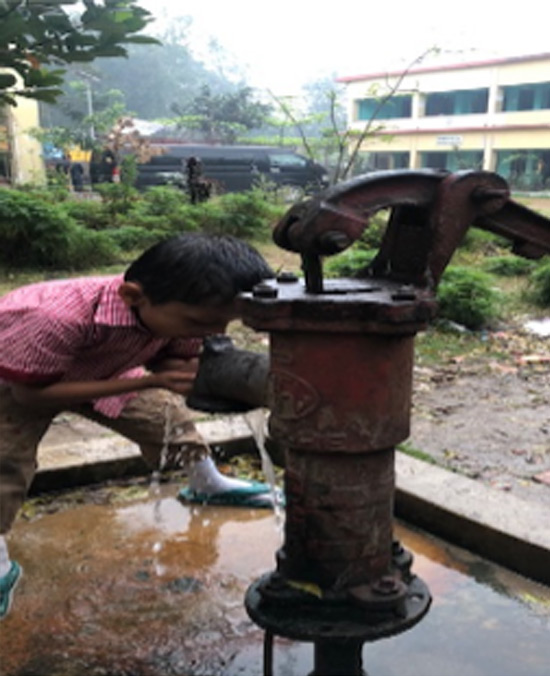
Bangladesh has one of the highest arsenic levels in groundwater in the world.

From its founding in 2005, Chemists Without Borders had a vision: to find a solution to the 40,000 Bangladeshis dying each year from illnesses caused by arsenic poisoning. In 2014, we started our project in Bangladesh and hired five interns to give presentations at high schools explaining the hazards of arsenic in drinking water. Later, we found funding to construct ring wells at two high schools whose wells were heavily contaminated with arsenic.

Currently, we are building a new drinking water and sanitation system at Terial High School in the Chittagong district of Bangladesh. A new well is being constructed to obtain water from the ground, which will be treated with an arsenic removal system to purify the water. Twenty drinking water and hand-washing stations are built to provide safe water to the students. The water will be sanitized with a UV disinfection system before it is supplied to the students for drinking and handwashing. This new arsenic remediation system was designed keeping in mind to solve the arsenic problem in the schools nationwide in Bangladesh.

Well-Water Testing Project

Bangladesh has one of the highest arsenic levels in groundwater in the world. The majority of Bangladeshi citizens use private wells to meet their water needs. Most wells are shallow, less than 300 feet in depth.

Chemists Without Borders recruits university and high school students to test the wells and educate the residents about arsenic and the possibility of sharing water from safe wells with families who take drinking water from contaminated wells.


Water-Sharing Project

Water-sharing is a unique program innovated by the Chemists Without Borders. This project is not just about water. It is about empowering young people to solve a health problem that has persisted for years. This program allows neighbors to share water from certified arsenic-free wells. Chemists Without Borders runs this program with the help of high school and college students. Students are trained in testing the well water using a field test kit. The results are shared with the well owners, and the owners are educated about the health risks of high arsenic in the water. Owners of the well with no arsenic or less than 50 ppb arsenic levels are encouraged to enroll in the water sharing program, where they can share the arsenic-safe well water with their neighbors at a nominal cost.

Community participation is at the core of this program. By involving the whole community, the water-sharing program allows for minimizing the risk of arsenic exposure to the population at the lowest cost. We intend to expand this program throughout Bangladesh and other countries where arsenic in water is a problem. The beauty of this model is that it is simple, yet effective; ambitious, yet realistic; extensive, yet cost-effective.