
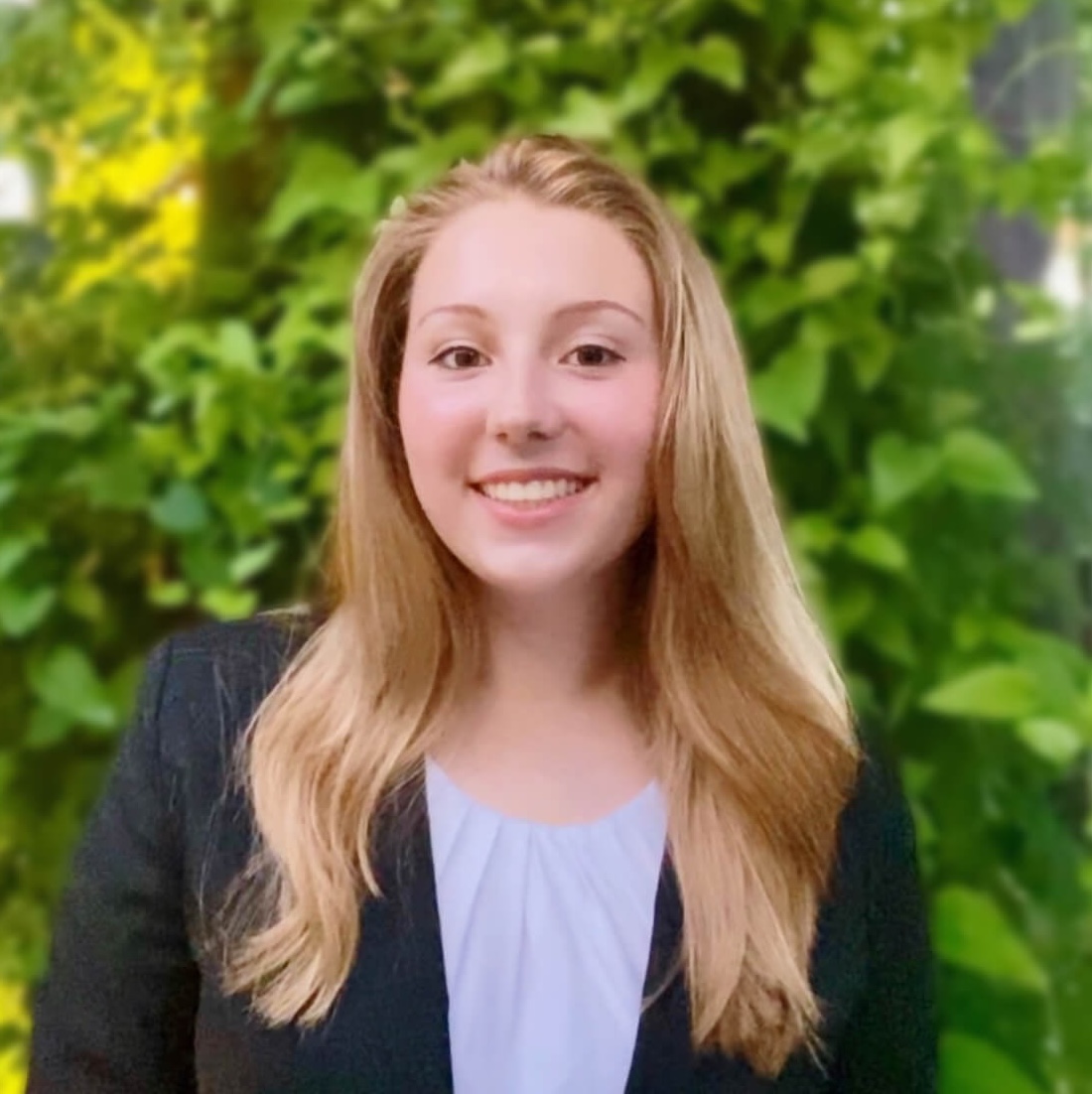
Reagan Labert
Student Advisor

Reagan Labert serves as a student volunteer in Chemists Without Borders. She began working with CWB in 2024 as a part of the Per- and Polyfluoroalkyl Substances (PFAS) Research Group. Her work in this initiative culminated in a written report on the relation between national income, geography, and PFAS contamination. Reagan is passionate about using science as an avenue by which to improve the education, access to resources, and standards of living of communities around the globe.

Prior to working with CWB, Reagan volunteered extensively with the Virginia Aquarium and Marine Science Center. Over her five years as a Junior Gallery Docent, she helped to foster curiosity about the natural world by educating visitors on marine life and promoting conservation efforts, eventually earning the President’s Volunteer Service Award in 2021 and 2022. Reagan’s work with the Virginia Aquarium allowed her to realize the close ties between the environment and her surrounding community, and this inspired her to explore the potential impact science could have on helping other communities through CWB.

Currently, Reagan is an undergraduate student at Yale University, majoring in Molecular Biophysics and Biochemistry. After completing her B.S., Reagan hopes to achieve a PhD in biochemistry or a related field. Outside of the classroom, Reagan is involved in extracurriculars such as the Yale Undergraduate Society of Ethics and the Yale International Genetically Engineered Machine (iGEM) team. When she’s not in class or volunteering, Reagan enjoys paddleboarding and making pottery.
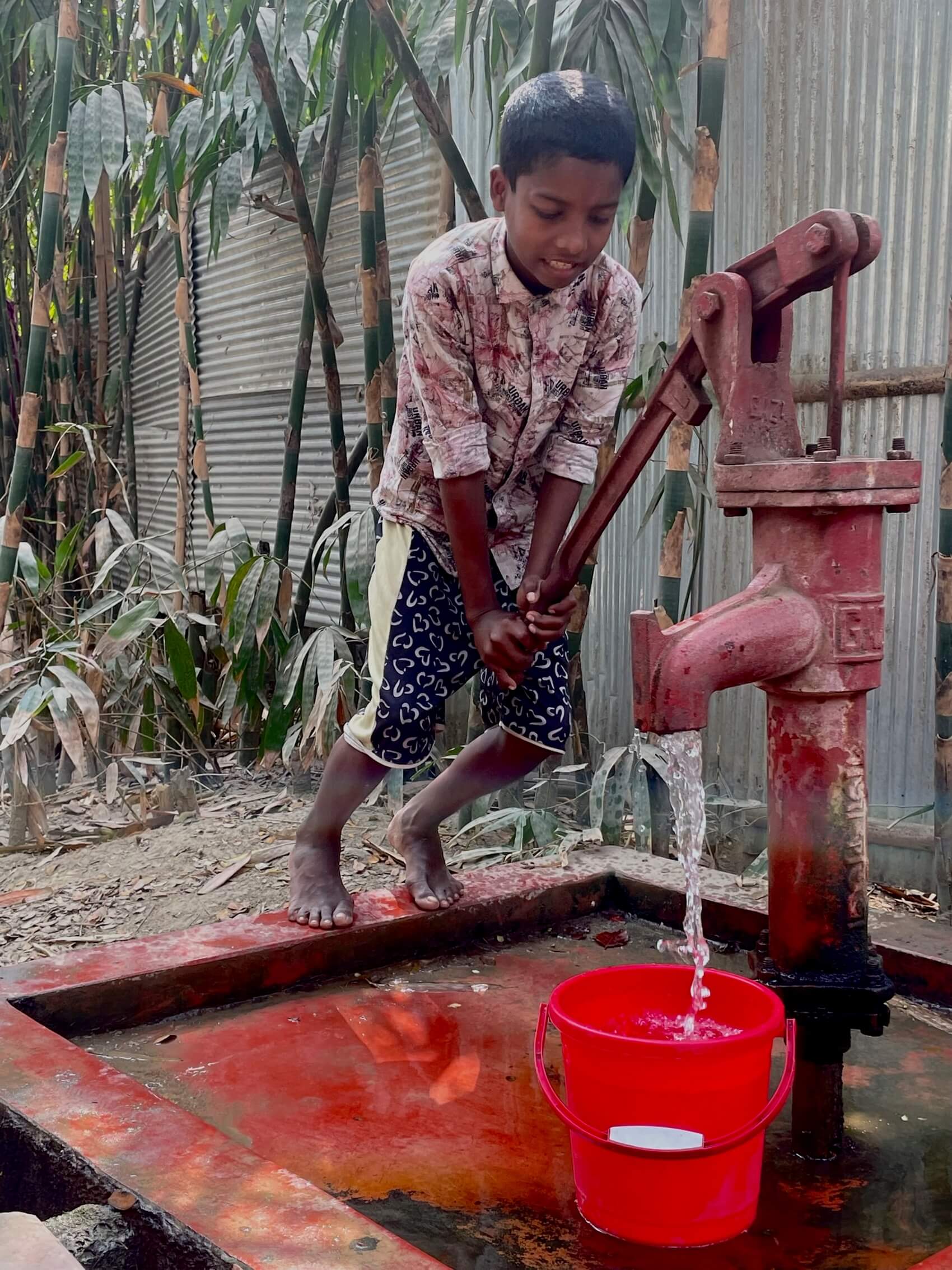
Bangladesh has one of the highest arsenic levels in groundwater in the world.

From its founding in 2005, Chemists Without Borders had a vision: to find a solution to the 40,000 Bangladeshis dying each year from illnesses caused by arsenic poisoning. In 2014, we started our project in Bangladesh and hired five interns to give presentations at high schools explaining the hazards of arsenic in drinking water. Later, we found funding to construct ring wells at two high schools whose wells were heavily contaminated with arsenic.

Currently, we are building a new drinking water and sanitation system at Terial High School in the Chittagong district of Bangladesh. A new well is being constructed to obtain water from the ground, which will be treated with an arsenic removal system to purify the water. Twenty drinking water and hand-washing stations are built to provide safe water to the students. The water will be sanitized with a UV disinfection system before it is supplied to the students for drinking and handwashing. This new arsenic remediation system was designed keeping in mind to solve the arsenic problem in the schools nationwide in Bangladesh.

Well-Water Testing Project

Bangladesh has one of the highest arsenic levels in groundwater in the world. The majority of Bangladeshi citizens use private wells to meet their water needs. Most wells are shallow, less than 300 feet in depth.

Chemists Without Borders recruits university and high school students to test the wells and educate the residents about arsenic and the possibility of sharing water from safe wells with families who take drinking water from contaminated wells.


Water-Sharing Project

Water-sharing is a unique program innovated by the Chemists Without Borders. This project is not just about water. It is about empowering young people to solve a health problem that has persisted for years. This program allows neighbors to share water from certified arsenic-free wells. Chemists Without Borders runs this program with the help of high school and college students. Students are trained in testing the well water using a field test kit. The results are shared with the well owners, and the owners are educated about the health risks of high arsenic in the water. Owners of the well with no arsenic or less than 50 ppb arsenic levels are encouraged to enroll in the water sharing program, where they can share the arsenic-safe well water with their neighbors at a nominal cost.

Community participation is at the core of this program. By involving the whole community, the water-sharing program allows for minimizing the risk of arsenic exposure to the population at the lowest cost. We intend to expand this program throughout Bangladesh and other countries where arsenic in water is a problem. The beauty of this model is that it is simple, yet effective; ambitious, yet realistic; extensive, yet cost-effective.