
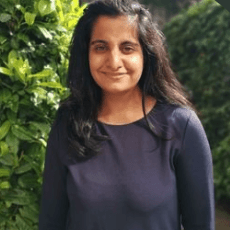
Aliyah Saifuddin
Advisor, Adult Education

Aliyah has been a Professional Advisor for Chemists Without Borders since April 2025. She is committed to using science for humanitarian causes and is passionate about the equal distribution and access to basic needs and resources across the globe to achieve a good quality of life. 

Aliyah holds a PhD in Chemistry and a BSc (Hons) in Chemistry with Biomedicine from King’s College London, where she worked on developing accessible analytical methods for small metabolite quantification in biological and environmental samples and collaborated with a range of cross-disciplinary stakeholders. As part of her professional development, she undertook entrepreneurial mindset courses, which instigated her passion for sustainability and the United Nations Sustainable Development Goals, leading her to work with Chemists Without Borders. With experience spanning academic research, education, and interdisciplinary collaboration, and a fascination for translational science, taking concepts from the bench to the field, she brings technical expertise and a deep sense of responsibility to global challenges, such as access to clean water, sustainable chemistry, zero poverty, and equitable education.

Aliyah has previously taught undergraduate students and held a range of tutoring roles, supporting students from less affluent backgrounds during the COVID-19 pandemic, and now provides business and science consultancy services to researchers and start-ups in London. She lives in South-East London, United Kingdom. Outside of work, she enjoys spending time with friends and family, going to the gym, and looking forward to travelling more and exploring the world.
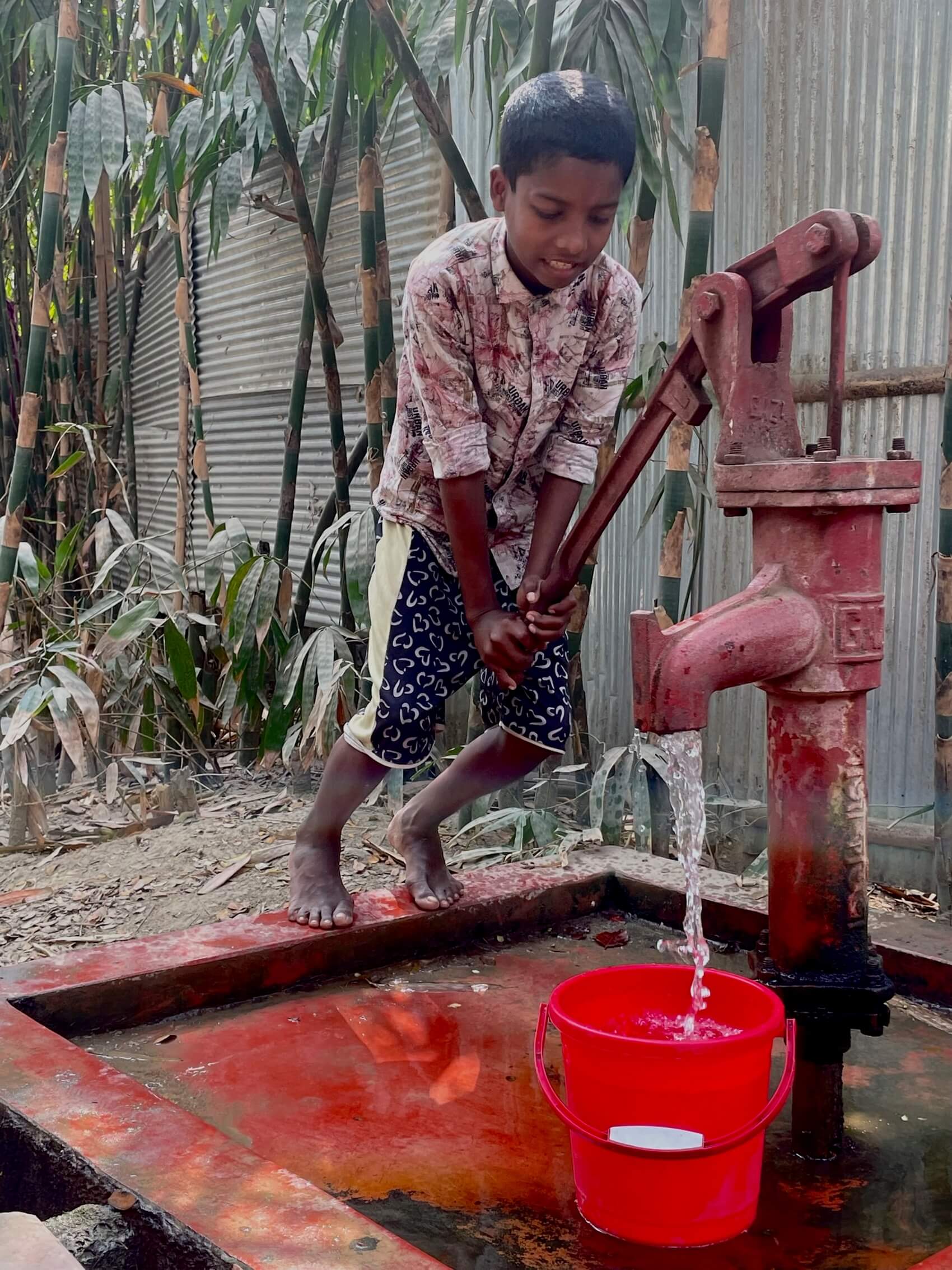
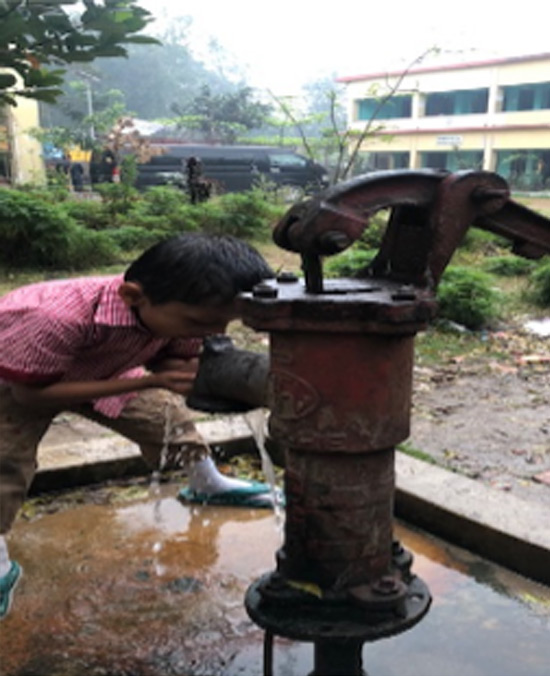
Bangladesh has one of the highest arsenic levels in groundwater in the world.

From its founding in 2005, Chemists Without Borders had a vision: to find a solution to the 40,000 Bangladeshis dying each year from illnesses caused by arsenic poisoning. In 2014, we started our project in Bangladesh and hired five interns to give presentations at high schools explaining the hazards of arsenic in drinking water. Later, we found funding to construct ring wells at two high schools whose wells were heavily contaminated with arsenic.

Currently, we are building a new drinking water and sanitation system at Terial High School in the Chittagong district of Bangladesh. A new well is being constructed to obtain water from the ground, which will be treated with an arsenic removal system to purify the water. Twenty drinking water and hand-washing stations are built to provide safe water to the students. The water will be sanitized with a UV disinfection system before it is supplied to the students for drinking and handwashing. This new arsenic remediation system was designed keeping in mind to solve the arsenic problem in the schools nationwide in Bangladesh.

Well-Water Testing Project

Bangladesh has one of the highest arsenic levels in groundwater in the world. The majority of Bangladeshi citizens use private wells to meet their water needs. Most wells are shallow, less than 300 feet in depth.

Chemists Without Borders recruits university and high school students to test the wells and educate the residents about arsenic and the possibility of sharing water from safe wells with families who take drinking water from contaminated wells.


Water-Sharing Project

Water-sharing is a unique program innovated by the Chemists Without Borders. This project is not just about water. It is about empowering young people to solve a health problem that has persisted for years. This program allows neighbors to share water from certified arsenic-free wells. Chemists Without Borders runs this program with the help of high school and college students. Students are trained in testing the well water using a field test kit. The results are shared with the well owners, and the owners are educated about the health risks of high arsenic in the water. Owners of the well with no arsenic or less than 50 ppb arsenic levels are encouraged to enroll in the water sharing program, where they can share the arsenic-safe well water with their neighbors at a nominal cost.

Community participation is at the core of this program. By involving the whole community, the water-sharing program allows for minimizing the risk of arsenic exposure to the population at the lowest cost. We intend to expand this program throughout Bangladesh and other countries where arsenic in water is a problem. The beauty of this model is that it is simple, yet effective; ambitious, yet realistic; extensive, yet cost-effective.