
“I’d rather have questions I can’t answer than have answers I can’t question.” –Richard Feynman
What if the people who feel most out of place in science are the ones science needs most?
What if the discomfort, the misalignment, the quiet sense that something is missing is not something to fix, but something to trust?
There has always been a certain kind of person at the edges of science. Not at its center, as history later remembers them, but at its margins, where ideas disrupt, where questions linger longer than they should, and where belonging is uncertain. These are the ones who do not quite fit the language of their time. Their curiosity moves differently. They resist the pressure to stay within boundaries. They are often dismissed as impractical, idealistic, or out of place.
And yet, again and again, they are the ones who move science forward.
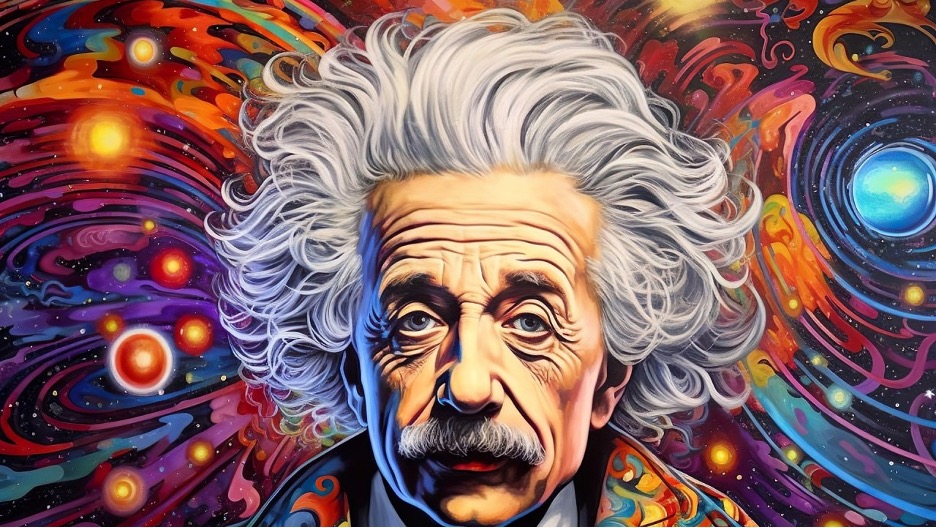
Albert Einstein is a case in point. After graduating from the Swiss Federal Polytechnic, Einstein struggled for years to find an academic position. He was not the kind of student his professors supported. He questioned authority, skipped what did not serve him, and followed his own line of thought. When he sought entry into academia, the doors remained closed. For nearly a decade, he lived outside the system he would later transform.
He applied for positions and was rejected. His doctoral work was challenged and eventually had to be reshaped to align with accepted thinking to obtain his degree. There was no natural place for the questions he was asking.
So, he took a position at the Swiss Patent Office. What appears, in hindsight, as a setback became a kind of freedom. Reviewing patents on signal transmission, clock synchronization, and time, he was immersed in practical questions that quietly opened deeper ones. What is time? What does it mean to observe? When do events truly occur?
In 1905, still working as a Patent Clerk, he published the four papers that would reshape physics forever.
This is not an exception. It is a pattern. The history of science is packed with examples of “misfits” across multiple disciplines; progress has often come from those who worked beyond the accepted principles or domains.
Srinivasa Ramanujan saw mathematics in ways that formal systems could not yet explain. Barbara McClintock trusted what she observed in genetic movement long before others were ready to see it. Chien-Shiung Wu challenged assumptions that had been treated as unquestionable.
In each case, the barrier was not simply whether the ideas were correct. It was whether the scientific community was ready to recognize them. The resistance they faced was as much cultural as it was intellectual. What we call misfits are often those encountering the future of science long before it becomes visible to everyone else.
And in our own time, Katalin Karikó carried this pattern forward in a way that feels all too familiar.
For years, Karikó pursued the potential of mRNA, convinced it could transform medicine. But her work did not align with the priorities of funding bodies or academic institutions. Grants were rejected. Promotions did not come. At one point, she was demoted. Her research was seen as too uncertain, too impractical, too far from what was considered viable. And yet she continued.
Not because the system affirmed her, but because the question itself mattered. She felt the world would eventually catch up. Decades later, that same work became foundational to mRNA vaccines, impacting millions of lives.
Karikó’s story is not simply about perseverance. It is about conviction in the absence of validation. It is about staying with an idea long enough for the world to recognize it.
Albert Schweitzer followed a different path, but one no less misaligned with convention. Already established in theology and music, Schweitzer chose to study medicine not to advance his standing, but to serve communities in Central Africa. At a time when professional success followed a clear trajectory, he stepped away from it. He refused to separate knowledge from responsibility.
Schweitzer’s work was not just about treating illness. It was about rethinking the purpose of knowledge itself. He brought medicine into direct relationship with humanity, grounding it in dignity, service, and presence. His philosophy of “reverence for life” was not abstract. It was lived.
In both cases, the question was not whether they were capable. It was whether the systems around them could recognize what they were doing.
What we call misfits are often those who see what science could become before it becomes acceptable to pursue it.
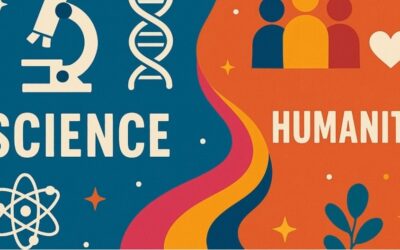
And yet today, many who feel drawn to science, especially those who want to use it in the service of humanity, find themselves in a familiar place. Not because they lack ability, but because they are asking different questions. They are asking who science serves, not just what it solves. They recognize that humanitarian challenges are not the domain of any single discipline or profession. They are complex human realities shaped by history, culture, power, and inequality, and they demand ways of thinking that cross boundaries.
Most graduate students and young scientists are encouraged to narrow, to specialize, to stay in their lane; to go along to get along. Over time, something essential is being trained out: the boldness required (and nurtured) to challenge what is already accepted, the encouragement to cross boundaries without permission. In its place, we learn to refine rather than reimagine, to stay within what is recognized and rewarded. We are training for precision, but not always for the kind of curiosity that connects or unsettles.
This has brought remarkable advances, but it has also narrowed the space for new ways of thinking. The Ph.D., a Doctor of Philosophy, was never meant to produce narrow expertise alone, but to cultivate thinkers who connect disciplines and deepen understanding. Somewhere along the way, that meaning has been lost. Training has become more technical and more distant from the human context in which knowledge lives. And yet the challenges we face are not disciplinary; they are human. To think broadly, to connect, to question beyond boundaries is not a departure from science. It is a return to it.
If you feel out of place in science today, you are not alone, and you are not wrong. If you have ever felt like a misfit, it may be because you are standing at the edge of what science can become. You are not here just to find your place within it, but to shape it, to bring it closer to humanity, and to carry it forward with courage, connection, and purpose.
Einstein did not wait for the system to make room for him. There was no indication that it ever would. He continued anyway, shaping his thinking outside of it until it could no longer be ignored. Moreover, his unorthodox employment and his inability to secure an academic position became the very assets that allowed him to explore his ideas.
This path is difficult, uncertain, often isolating, and rarely validated in real time. It asks you to continue without recognition, to trust your questions when others do not, and to hold together ideas that systems prefer to keep apart.
Chemists Without Borders exists for those who recognize themselves on this path. We are a nurturing community for those who think across disciplines, who are drawn to both science and humanity, who believe knowledge is most powerful when it is shared, grounded, and connected. A place where curiosity expands, where questions of meaning are welcomed, and where science is practiced alongside, not apart from, the people it serves.
We are here to help you build a home of your own.