
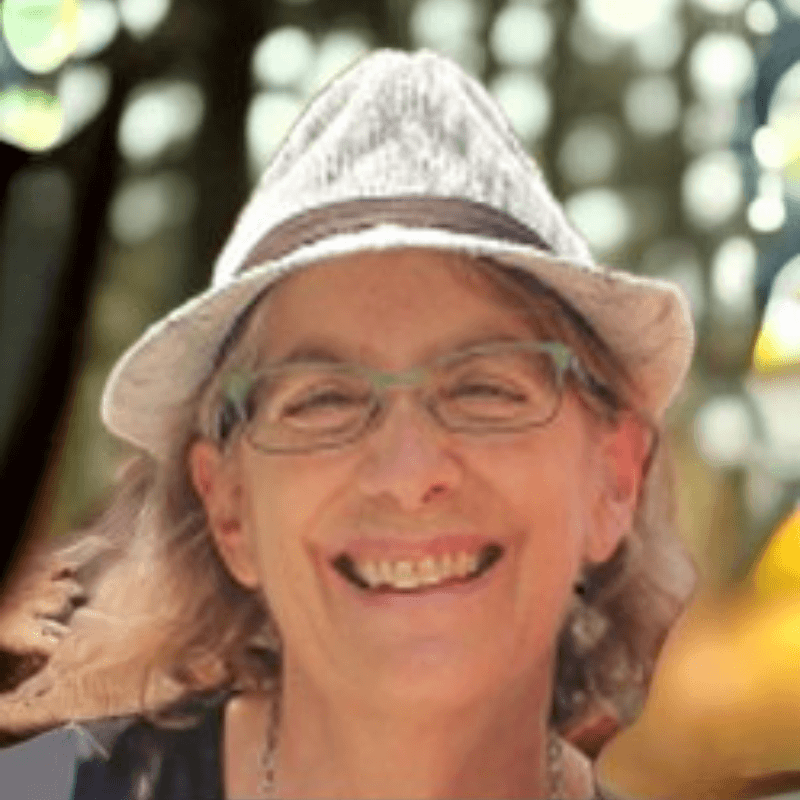
Stephanie Jed
Distinguished Humanist-in-residence

I am honored to join the community of Chemists without Borders. In my 40 years as an educator (and researcher) at UCSD, I was passionate about making connections between the humanities and STEM fields. I created opportunities in my teaching and research to create bridges with bioengineering, chemistry, biology, neuroscience, cardiology, and more. My understanding was/is that when we start with language and dialogue between people with different cultural (and research) perspectives, we have a chance to make breakthrough discoveries, advance our humanity, and develop constructive relations with the whole living universe. We are all teacher-learners who share our passions for reading, writing, language-learning, and research, in order to learn from our “students” and to discover – in relationship – our paths of self-development, mutual support, advocacy, and community-building.

My passions as a teacher-learner began to come into focus in 1978 as a Fulbright scholar in Rome (as a part of my Ph.D. program in Italian literature at Yale). There, in Rome, I began to learn a new way of thinking relationally. I was fortunate to meet intellectuals who didn’t see their research and learning pursuits as separate from their social and political commitments in the world. Ever since that year in Rome, I have also found ways to connect my passions for research and teaching to social activism. I was a co-founder (in the 1980s) of the San Diego Educators’ Committee on Central America and a columnist (in 1992) for The Lies of our Times, a journal of media criticism that critiqued (primarily) the New York Times. After retiring from UCSD (in 2021), I spent two years (2021-23) teaching as a volunteer at Freedom University (a program in Atlanta that prepares undocumented students to apply for admission and scholarships at private universities, because these students are not allowed, by law, to attend public universities). And in 2023-4, I served as a teaching artist in the San Diego Opera’s Words and Music program that engages high school students in underserved neighborhoods of San Diego in the discovery of their creative voices.

I look forward to serving the community of Chemists without Borders, hoping that my experiences as a writer, researcher, educator and activist might be useful to its mission and vision.
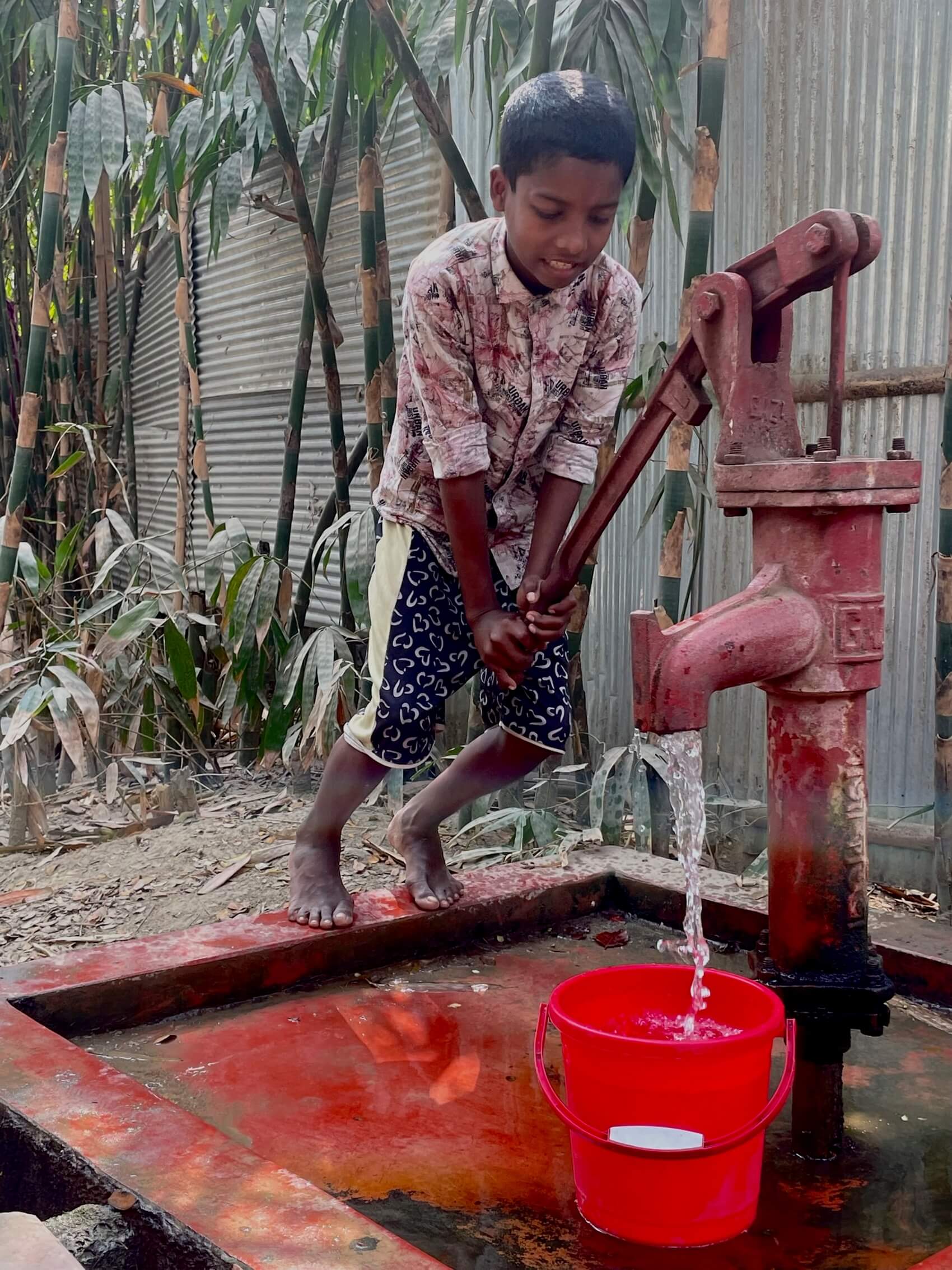
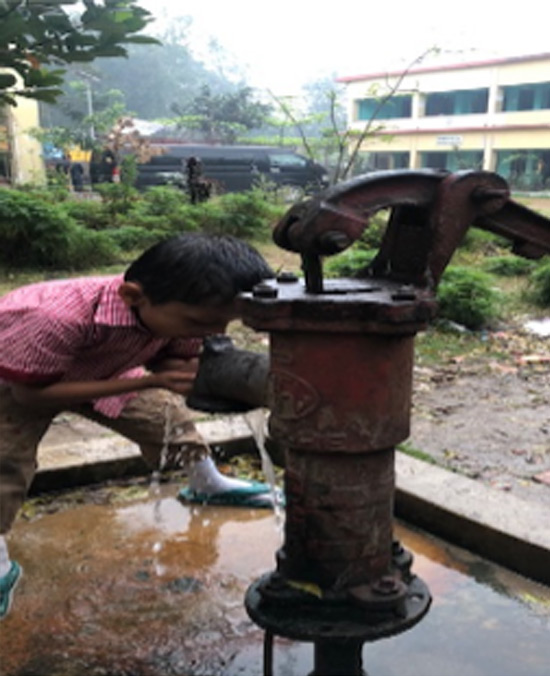
Bangladesh has one of the highest arsenic levels in groundwater in the world.

From its founding in 2005, Chemists Without Borders had a vision: to find a solution to the 40,000 Bangladeshis dying each year from illnesses caused by arsenic poisoning. In 2014, we started our project in Bangladesh and hired five interns to give presentations at high schools explaining the hazards of arsenic in drinking water. Later, we found funding to construct ring wells at two high schools whose wells were heavily contaminated with arsenic.

Currently, we are building a new drinking water and sanitation system at Terial High School in the Chittagong district of Bangladesh. A new well is being constructed to obtain water from the ground, which will be treated with an arsenic removal system to purify the water. Twenty drinking water and hand-washing stations are built to provide safe water to the students. The water will be sanitized with a UV disinfection system before it is supplied to the students for drinking and handwashing. This new arsenic remediation system was designed keeping in mind to solve the arsenic problem in the schools nationwide in Bangladesh.

Well-Water Testing Project

Bangladesh has one of the highest arsenic levels in groundwater in the world. The majority of Bangladeshi citizens use private wells to meet their water needs. Most wells are shallow, less than 300 feet in depth.

Chemists Without Borders recruits university and high school students to test the wells and educate the residents about arsenic and the possibility of sharing water from safe wells with families who take drinking water from contaminated wells.


Water-Sharing Project

Water-sharing is a unique program innovated by the Chemists Without Borders. This project is not just about water. It is about empowering young people to solve a health problem that has persisted for years. This program allows neighbors to share water from certified arsenic-free wells. Chemists Without Borders runs this program with the help of high school and college students. Students are trained in testing the well water using a field test kit. The results are shared with the well owners, and the owners are educated about the health risks of high arsenic in the water. Owners of the well with no arsenic or less than 50 ppb arsenic levels are encouraged to enroll in the water sharing program, where they can share the arsenic-safe well water with their neighbors at a nominal cost.

Community participation is at the core of this program. By involving the whole community, the water-sharing program allows for minimizing the risk of arsenic exposure to the population at the lowest cost. We intend to expand this program throughout Bangladesh and other countries where arsenic in water is a problem. The beauty of this model is that it is simple, yet effective; ambitious, yet realistic; extensive, yet cost-effective.