
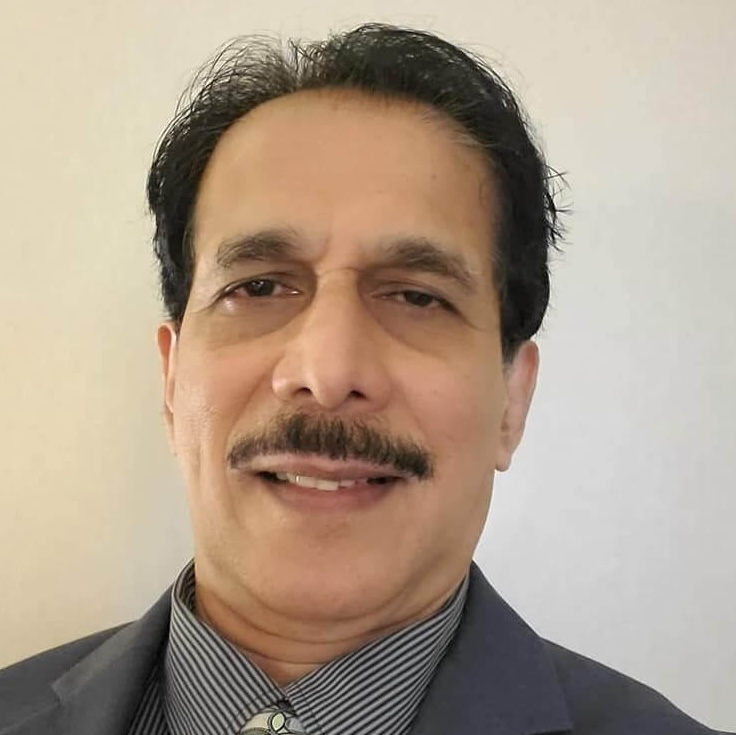
Chandrasiri (Chandra) Jayakody
VP Student Engagement

Chandra is the Vice President, Student Engagement of Chemists Without Borders. As a scientist and global citizen, he is deeply inspired by CWB’s mission to improve the quality of life in communities most in need through science and holistic interventions. Their guiding ethos—Science in Service to Humanity—perfectly aligns with his own belief that chemistry is not just a discipline, but a tool for creating lasting impact in education, health, community engagement, environmental justice, and sustainable developments in rural communities.

Chandra holds a BSc (honors) and MPhil degree (Natural Products Chemistry) from the University of Colombo, Sri Lanka, and a PhD in Organic/Polymer Chemistry from Marquette University, Milwaukee, Wisconsin, USA, followed by a post-doctoral training at Florida Institute of Technology.   His academic and industrial journey through the University of Colombo, National Science Foundation, Sri Lanka, Marquette University, Florida Tech, Chestnut Ridge Foam Inc, Porex/ Filtration Group, and Urethane Technologies Consulting, LLC., is rooted in curiosity, critical thinking, and a desire to use chemistry to solve real-world problems through new innovations.

What draws him most to Chemists Without Borders is their commitment to equity and access—ensuring that chemistry serves not only those at the top of the innovation chain but also the people at the grassroots who often face the brunt of global challenges. Whether it’s providing clean water, removing toxic substances, supporting science education, student engagement or advancing science programming in rural education, their work resonates with how he wants to use his knowledge and experience. Beyond academics, he enjoys engaging with communities through organizations like ASTM, CUFSAA-NA, ACS, and Rotary.

One of his favorite quotes is by Marie Curie: “Nothing in life is to be feared, it is only to be understood.” This continues to remind him that as scientists, our responsibility is not only to understand the world but also to make it more livable, equitable, and hopeful for others. Being part of Chemists Without Borders gives him a chance to be part of something bigger—to apply science with empathy, and to collaborate with others who believe that science can, and should, change lives, especially those who live in underserved rural communities.
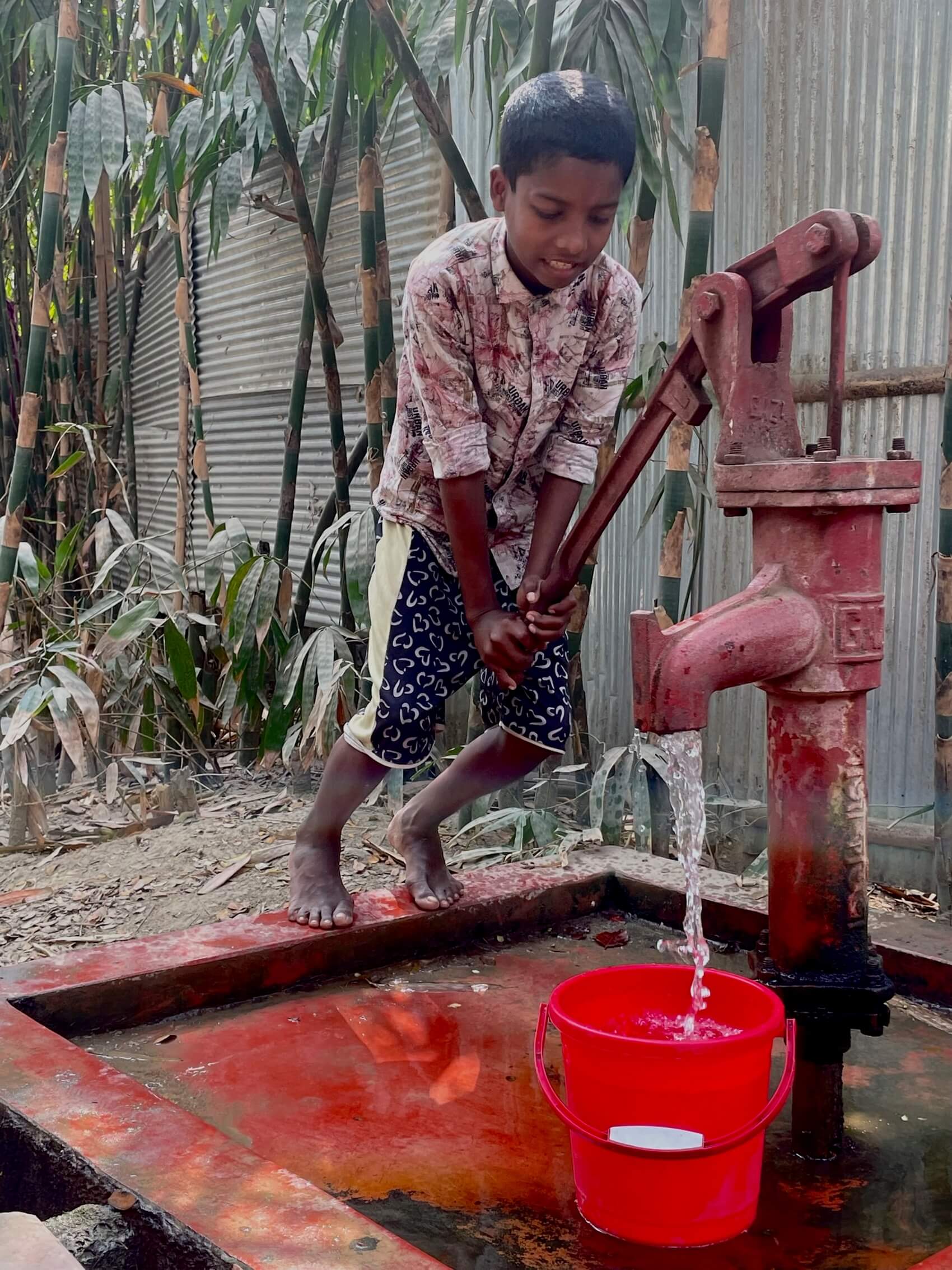
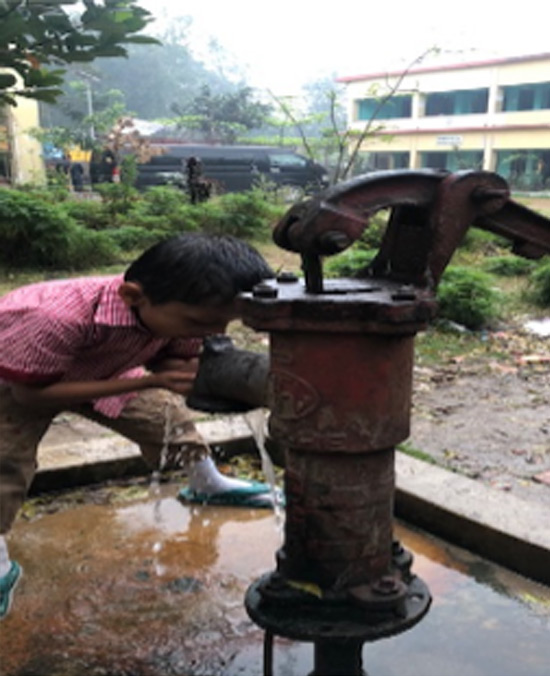
Bangladesh has one of the highest arsenic levels in groundwater in the world.

From its founding in 2005, Chemists Without Borders had a vision: to find a solution to the 40,000 Bangladeshis dying each year from illnesses caused by arsenic poisoning. In 2014, we started our project in Bangladesh and hired five interns to give presentations at high schools explaining the hazards of arsenic in drinking water. Later, we found funding to construct ring wells at two high schools whose wells were heavily contaminated with arsenic.

Currently, we are building a new drinking water and sanitation system at Terial High School in the Chittagong district of Bangladesh. A new well is being constructed to obtain water from the ground, which will be treated with an arsenic removal system to purify the water. Twenty drinking water and hand-washing stations are built to provide safe water to the students. The water will be sanitized with a UV disinfection system before it is supplied to the students for drinking and handwashing. This new arsenic remediation system was designed keeping in mind to solve the arsenic problem in the schools nationwide in Bangladesh.

Well-Water Testing Project

Bangladesh has one of the highest arsenic levels in groundwater in the world. The majority of Bangladeshi citizens use private wells to meet their water needs. Most wells are shallow, less than 300 feet in depth.

Chemists Without Borders recruits university and high school students to test the wells and educate the residents about arsenic and the possibility of sharing water from safe wells with families who take drinking water from contaminated wells.


Water-Sharing Project

Water-sharing is a unique program innovated by the Chemists Without Borders. This project is not just about water. It is about empowering young people to solve a health problem that has persisted for years. This program allows neighbors to share water from certified arsenic-free wells. Chemists Without Borders runs this program with the help of high school and college students. Students are trained in testing the well water using a field test kit. The results are shared with the well owners, and the owners are educated about the health risks of high arsenic in the water. Owners of the well with no arsenic or less than 50 ppb arsenic levels are encouraged to enroll in the water sharing program, where they can share the arsenic-safe well water with their neighbors at a nominal cost.

Community participation is at the core of this program. By involving the whole community, the water-sharing program allows for minimizing the risk of arsenic exposure to the population at the lowest cost. We intend to expand this program throughout Bangladesh and other countries where arsenic in water is a problem. The beauty of this model is that it is simple, yet effective; ambitious, yet realistic; extensive, yet cost-effective.